Why Your Boat Battery Dies Even With the Engine Running
Boat battery charging has gotten complicated with all the conflicting advice flying around online. Forums say replace the alternator. Your buddy says it’s the battery. The marine shop wants $400 just to look at it. Meanwhile, you’re sitting at the dock with a dead battery and a perfectly running engine — which makes zero sense on the surface.
As someone who spent three seasons chasing a ghost charging problem on a 2017 Yamaha F150, I learned everything there is to know about marine electrical systems. Today, I will share it all with you.
Here’s the short version first. Your marine charging system has exactly four parts. The stator (outboards) or alternator (inboards) generates the power. The rectifier-regulator converts and controls that power. The wiring connects it all. The battery stores whatever makes it through. One bad link in that chain and you get nothing — doesn’t matter how healthy the other three are.
The good news: you don’t need a shop for this. A multimeter runs about twelve dollars on Amazon. Follow these checks in order and you’ll find the problem in under an hour.
Start Here — Check Voltage at the Battery With Engine Running
Probably should have opened with this section, honestly. I replaced a perfectly good $220 alternator once because I skipped this step. Don’t make my mistake.
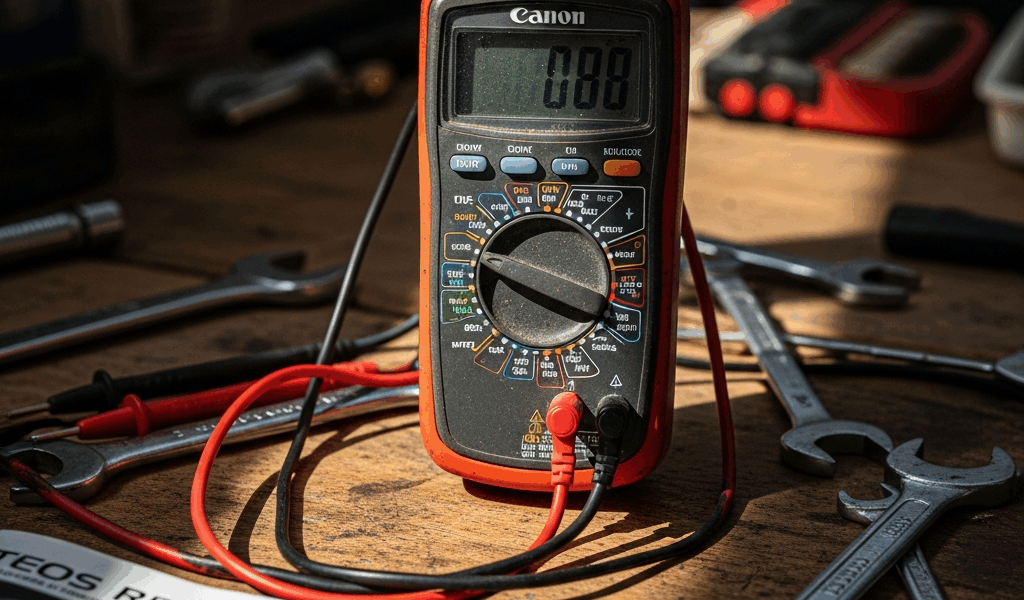
Grab a digital multimeter — at least if you want an actual answer instead of a guess. I’m apparently sensitive to cheap tools and the Fluke 117 works for me while the no-name Harbor Freight units never gave me consistent readings. That said, even a basic Craftsman or Extech from Amazon handles this job fine.
Set it to DC voltage. Red probe on the positive terminal, black on negative. Engine off first. A healthy battery rests between 12.4 and 12.8 volts at rest. Write that number down — you’ll need it for comparison.
Start the engine. Let it idle. Read the voltage again.
That single measurement answers the biggest question in this whole diagnosis.
- Below 12.6V at idle — The charging system is dead. Nothing is reaching the battery. Keep reading.
- 12.8V to 14.8V at idle — Normal range. Your charging system works fine. Look elsewhere — parasitic draw or a tired battery is your actual problem.
- Above 14.8V and climbing with RPM — Regulator failure. Skip ahead to that section.
Rev the engine to around 2,000 RPM for thirty seconds. Voltage should climb one to two volts and hold steady. Climbs past 15.5V? That’s overcharging — regulator is gone. Stays stuck below 13V? Your charging source isn’t producing power at all.
How to Test the Stator or Alternator Output
But what is a stator, exactly? In essence, it’s a ring of copper windings mounted inside your outboard’s cowling that generates AC current as the flywheel spins past it. But it’s much more than that — it’s the very start of your entire electrical system, which is what makes it the first thing worth checking when charging fails.
Inboard alternators do the same job using a belt-driven rotor instead. Different setup, same principle.
If your multimeter has an AC voltage setting, probe the output wire coming off the stator or alternator — before the rectifier touches it. Rev to 2,000 RPM. You want to see somewhere between 15 and 30 volts AC depending on your motor. A reading of zero means the stator or alternator isn’t producing anything.
On outboards, look for physical damage while you’re in there. Water intrusion. Corrosion on the winding terminals. Burned windings have a very specific smell — charred plastic, sharp and acrid. Hard to miss once you’ve smelled it. New stators for a Yamaha F200 or similar run $300 to $600, so confirm failure before ordering.
On inboards, check the belt before assuming the alternator is dead. Press it midway between pulleys — it should give about a half inch under thumb pressure. A loose belt slips. A slipping belt doesn’t spin fast enough to generate voltage. That’s zero AC output with zero failed parts. A $15 belt adjustment saves you from an unnecessary alternator replacement.
Got AC output but still no DC voltage at the battery? Your rectifier is the culprit. Move on. No AC output and the belt is tight? The stator or alternator is done.
Checking the Rectifier, Regulator, and Wiring Connections
The rectifier-regulator converts AC from the stator into usable DC and keeps voltage capped — usually around 14.5 volts on a 12V system. It fails more often than people expect, and it rarely fails dramatically. Usually it just quietly stops working.
Start with what you can actually see. Trace the wire from the stator to the rectifier box and check every connector along the way. Green or white crusty buildup is salt intrusion. That alone kills more charging systems than actual part failures — I’ve seen brand-new stators rendered useless by a corroded $3 connector. Disconnect the connector, hit both sides with WD-40 Electrical Contact Cleaner, let it dry completely, reconnect.
That was probably the fix. Seriously.
Check the ground wire next — typically a heavy black or bare copper cable from the engine block or battery negative to the rectifier case. A loose ground is sneaky. The engine starts and runs perfectly. The charging current, though, has nowhere to return. One loose 10mm bolt stops everything. Wiggle every ground connection and look for movement.
Inspect the rectifier housing itself. Burn marks? Melted or blackened plastic casing? That unit is finished internally — no amount of cleaning fixes it. Replacement on Mercury SmartCraft systems or similar integrated units runs $400 to $800 depending on the motor. Not cheap. Confirm it’s actually failed before buying.
If everything looks clean visually, do a continuity check. Set the multimeter to ohms. Disconnect the positive lead from the rectifier and probe the stator input wire. You’re looking for 2 to 10 ohms of resistance — some, but not infinite. An open circuit reading means an internal break somewhere in that line.
When the Battery Itself Is the Problem
So your voltage reads normal while running but the battery dies anyway. That’s actually good news — it means the stator and regulator are both fine. The battery is lying to you.
Batteries age. Four years in a marine environment — heat cycles, salt air, constant vibration — causes internal sulfation that a resting voltage reading simply won’t reveal. The battery sits at 12.6V on the bench looking perfectly healthy. Put a load on it — starter motor, electronics, bilge pump — and the voltage collapses instantly. No cranking power. Dead dashboard. Nothing.
A load test catches this. Many auto parts stores — AutoZone, O’Reilly, Advance — do it for free. The test applies 150 amps of draw for 15 seconds while measuring voltage drop. Healthy batteries stay above 9.6V. Sulfated batteries drop below 9V almost immediately. That’s your answer right there.
Battery over four years old and charging tests look fine? Replace it. Odyssey, Optima Blue Top, or Lifeline AGM units run $150 to $300 — more than a standard flooded battery, but they last six to eight years instead of three. That math works out.
If all four checks come back clean — battery voltage, stator output, rectifier inspection, load test — you’re probably dealing with a parasitic draw instead. Something is pulling current when the engine is off. The fix involves putting your multimeter in series on the battery negative lead and pulling fuses one at a time until the draw disappears. Most of the time it’s a cabin light relay stuck closed or a bilge pump running continuously. Annoying to find. Easy to fix once you do.
Work through these tests in order. You’ll have your answer before dinner.




Stay in the loop
Get the latest maritimematterstoday updates delivered to your inbox.