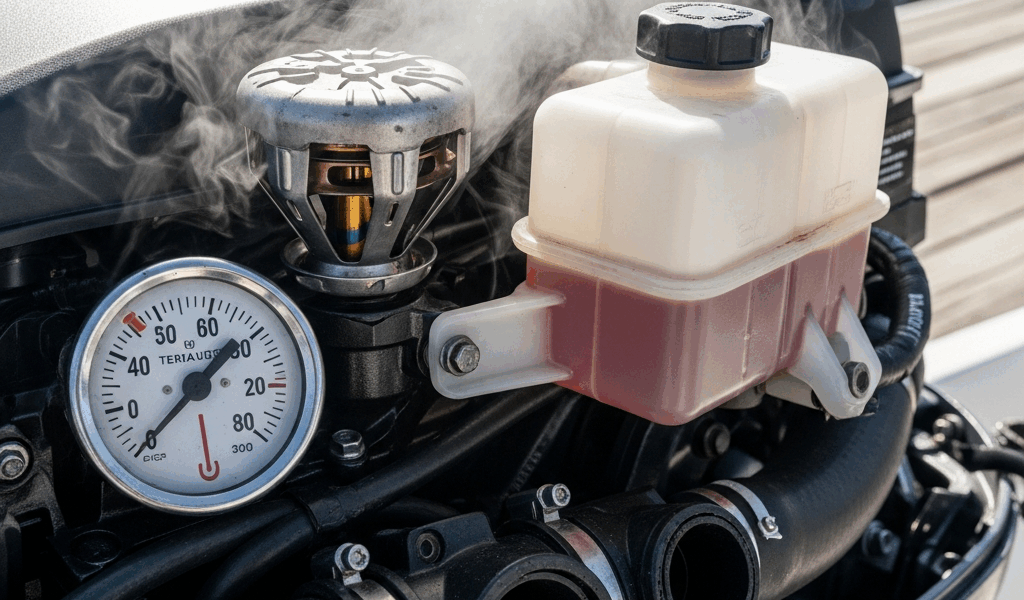
How to Tell Your Boat Engine Is Overheating
Boat engine overheating has gotten complicated with all the conflicting advice flying around. But the warning signs themselves? Pretty consistent across most engines. You’ll usually catch it before things go catastrophic — at least if you know what you’re actually looking at.
The temperature gauge climbing into the red is your clearest signal. Most boats show trouble past 180°F or 190°F, sometimes getting there in under a minute. That’s warning number one. Don’t wait to see what happens next.
Then comes the alarm. Modern engines have audible temperature alarms — beeping, chirping, sometimes a sustained screech — that trigger when coolant temps spike. Hard to miss. They exist specifically because people ignore gauges. Both systems are there for a reason.
Power drops noticeably too. The throttle feels different. There’s a hesitation or sluggishness that wasn’t there ten minutes ago. The engine management system is pulling timing and fuel automatically to protect itself from damage.
Steam or visible mist rising from the engine bay is bad. So is a burning smell — either something electrical or that distinct hot-metal scent. That smell means you’ve already moved past the early stages. Act fast.
Check your telltale stream. Most outboards and many inboards have a small water outlet near the transom that shows raw water circulating. Stopped flowing? Stream feels hot? Cooling system failure is actively underway.
Probably should have opened with this section, honestly. Catching overheating in the first thirty seconds saves thousands in repair costs. A quick glance at your gauges and telltale every few minutes is the difference between a five-minute fix and a full engine rebuild.
Most Common Causes of Boat Engine Overheating
A failed or clogged water pump impeller ranks first. The impeller is a soft rubber component with curved blades that spins inside the raw water pump, forcing seawater or lake water through the cooling passages. Saltwater, sand, debris, and plain old age harden and crack the rubber. When it fails, circulation stops. That’s it.
Blocked water intake comes second. Kelp, grass, mud, debris — all of it gets sucked into the intake strainer or directly into the intake port. I’ve pulled out everything from plastic grocery bags to pieces of fishing net. One summer on Lake Erie I found a live crab wedged in an intake. Still angry about being there. Don’t make my mistake of assuming the intake is always clear just because the water looks clean.
A stuck thermostat prevents coolant from flowing properly. The thermostat acts as a flow gate, opening once the engine hits operating temperature. Sticks closed, coolant backs up, heat spikes fast. Simple failure, serious consequences.
Low coolant affects freshwater-cooled inboards primarily. These engines run a closed-loop system — similar to a car. Coolant level drops from a leak or just hasn’t been topped off in two seasons, and suddenly the system can’t move heat away from the block fast enough.
Air locks trap air in the cooling system. This happens most often after winterization, hose replacement, or when an engine sits for six months untouched. Air pockets prevent water from moving through sections of the engine entirely.
Debris in the raw water strainer restricts flow. The strainer basket catches sediment before it reaches the pump. Clogged basket means no circulation — even with a perfectly functioning pump behind it.
Step-by-Step Diagnosis Starting With the Easiest Checks
- Look at the raw water strainer. It sits between the water intake and the pump — usually a clear bowl or opaque housing with a basket inside. Kill the engine. Unscrew the bottom drain plug and catch the water in a bucket. Pull out the basket. Hold it up to light. A clean basket is nearly see-through. Heavy sediment, dark buildup, debris packed in the mesh? That’s your culprit. Even moderate clogging restricts flow enough to cause overheating in warm weather or at higher throttle — especially on engines running above 3,500 RPM for extended periods.
- Check the telltale stream. Engine running, look for that small stream exiting near the transom — or on the side housing of an inboard. Steady flow, cool to slightly warm to the touch. Hot or completely stopped means serious circulation failure. Weak but running might mean partial blockage. Still worth investigating immediately, but you have a few more minutes before things get worse.
- Inspect the water pump impeller. This means removing the pump housing — manageable for most people with basic tools. A Phillips screwdriver and a socket wrench handle most of it, though Yamaha, Mercruiser, and OMC all use slightly different setups on their lower units. Pull the impeller out and look at it. Good rubber stays flexible, blades hold their shape. Bad impellers show cracked blades, hardened rubber, missing chunks. Even one cracked blade causes circulation loss. I’m apparently a 300-hours-and-replace kind of person, and that schedule works for me while pushing it longer never does. Most replacement impellers cost between $25 and $85 depending on engine brand.
- Check your coolant level — freshwater systems only. Let the engine cool for at least fifteen minutes first. Open the coolant overflow or expansion tank. Coolant should sit at the marked level line. Low? Top it off with the correct type for your engine — don’t mix brands or formulations. Losing coolant regularly means there’s a leak somewhere else in the system. A weeping hose fitting can be patched temporarily, but plan a proper repair before the next outing.
- Feel the thermostat housing. Run the engine a few minutes. The thermostat housing — the casting where the top coolant hose connects — should warm up steadily alongside the engine. Stays cold while the rest heats up? Thermostat might be stuck open. Not your overheating problem typically, but worth noting. Gets extremely hot while the temperature gauge spikes hard? Thermostat likely stuck closed, blocking flow entirely.
How to Fix the Most Common Overheating Problems
Clean or Replace the Raw Water Strainer
Engine off, let it cool down. Unscrew the drain plug at the bottom of the strainer housing and empty it into a bucket. Pull the cover bolts — usually two or four, depending on housing size — and slide out the basket. Rinse thoroughly with fresh water from a garden hose. Moderate buildup flushes away easily. Torn basket or buildup that won’t clear? Replace it. Strainer baskets run $15 to $40 at most marine suppliers. Reassemble, refill, restart. Your telltale stream should return to normal within thirty seconds of startup.
Impeller Replacement (Most Common Fix)
This is the repair most boat owners handle themselves. Your engine manual shows exact bolt locations for your specific model. Remove those bolts — usually three to five. Slide the pump cover off. The impeller either comes out with it or stays seated in the housing. Pull it out and set it next to the new one. Note which direction the blades curve — the new impeller goes in the same orientation. Most have a rotation direction stamped or embossed on the hub.
Before installing, apply a thin coat of petroleum jelly to the blades. This eases the rubber over the pump shaft and prevents tearing during installation. Slide it in carefully, confirming all blades seat properly without folding back. Reinstall the cover, tighten bolts in a cross pattern — not sequentially around the housing. Fill the water jacket and run the engine briefly. Check around the pump housing for leaks.
Coolant or water leaking from the pump housing itself after reassembly? Stop. The housing might be cracked or the seal surface damaged. That’s a mechanic’s job — specifically someone familiar with your engine brand.
Clearing Water Intake Blockages
External blockages visible at the intake — kelp, grass, rope — get cut away carefully with a knife before restarting. For submerged blockages, pull the intake strainer and flush backward through the line with a hose. Debris lodged deeper in the intake manifold requires removing the intake hose and flushing or probing gently from inside. Don’t force anything. Forcing debris further in creates a worse problem than the original clog.
Thermostat Replacement
The thermostat housing bolts directly to the engine block — usually toward the front. Unbolt it, pull it off, slide out the old thermostat. Grab the replacement. OEM thermostats for marine engines run $40 to $120 depending on the brand. Install it with the same orientation as the original. Refill coolant to the marked level. Run the engine and monitor the temperature gauge for ten minutes. Most people get this wrong only once — after that it’s a straightforward thirty-minute swap.
How to Prevent Your Boat Engine From Overheating Again
Replace the impeller every season if you run in saltwater or brackish water regularly. Freshwater users can stretch it to every 18 months, but annual replacement is honestly safer and cheaper than the alternative. Write it on the maintenance calendar alongside your oil change. A $40 impeller now versus a $4,000 engine repair later — that math isn’t complicated.
Flush with fresh water for ten to fifteen minutes after every saltwater outing. Engine running in neutral, flushing port connected to a standard garden hose. This clears salt residue from the cooling passages and keeps the strainer from building up mineral deposits over the season.
Check the raw water strainer before every trip if you run in debris-prone areas — river mouths, marinas with weed growth, anywhere after storms churn up the bottom. Thirty seconds of inspection prevents most overheating episodes before they start.
At the start of each season, inspect all coolant hoses and fittings on freshwater systems. Look for cracks, soft spots, weeping at the fittings, or brown staining on the outside of hoses. A failing hose gives you warning signs first. A sudden rupture just leaves you stranded three miles offshore with no warning at all.




Stay in the loop
Get the latest maritimematterstoday updates delivered to your inbox.