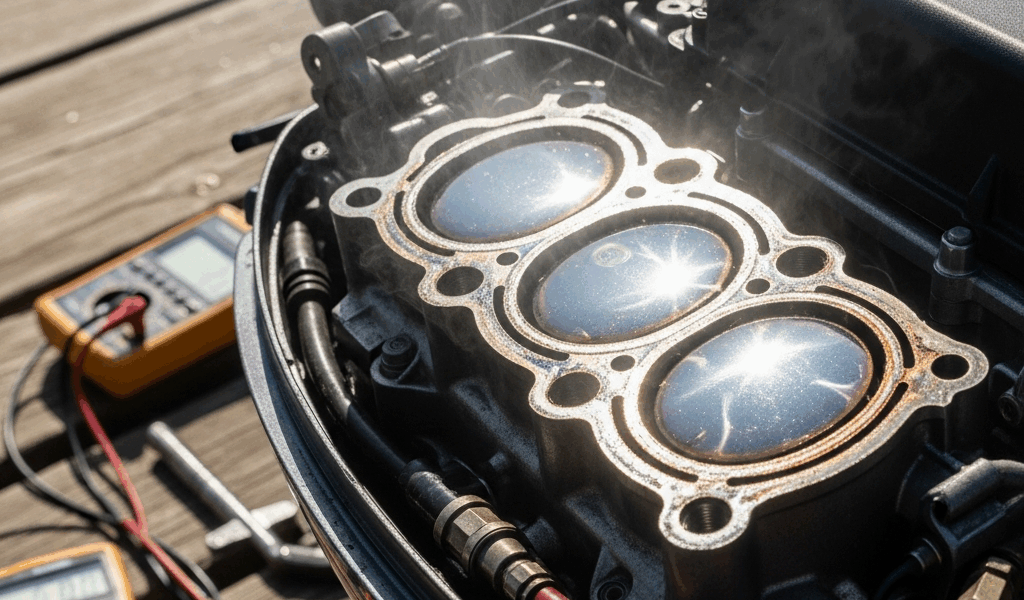
Why Hot Start Problems Are Different From Cold Start Problems
Outboard troubleshooting has gotten complicated with all the generic “check your battery” advice flying around. Most of it misses the point entirely — at least if your engine was running fine an hour ago and now refuses to restart.
As someone who got stranded in a cove last August with a 2015 Yamaha F150 rental, I learned everything there is to know about hot-start failures the hard way. Pushed hard into shore, killed the engine for lunch, came back thirty minutes later to nothing. Just a crank and silence. Embarrassing doesn’t cover it. Today, I will share it all with you.
But what is a hot-start problem, really? In essence, it’s a failure that only appears after your engine reaches operating temperature. But it’s much more than that — it’s a completely different diagnostic category from cold-start issues, and treating it like the same problem will waste your entire afternoon.
Cold engines deal with thick fuel, stiff rubber, and high electrical resistance in connectors. A boat that won’t start on a cold morning probably has a corroded terminal or a weak battery. A boat that dies after thirty minutes of running and won’t restart? Totally different animal. Two physical things happen when an outboard heats up: fuel vaporizes inside hot lines — that’s vapor lock — and heat-sensitive components expand until they stop working. Primer bulbs collapse. Fuel pumps drop below minimum pressure. Ignition coils crack internally. Loose grounds stop conducting.
The diagnosis path changes completely. You’re not hunting corrosion. You’re hunting components that function at 70°F and fail at 180°F. That distinction saves hours. That’s what makes hot-start diagnosis so maddening to boaters who keep chasing the wrong fix.
So, without further ado, let’s dive in.
Check These Four Things Before You Touch Anything Else
The Fuel Primer Bulb — Order of Likelihood: #1
Start here. Not because it’s cheap — though a replacement runs $12 to $25 at any marine supply — but because it fails more often than anything else on a hot restart and takes five minutes to test in the field.
After thirty minutes of running, heat soaks through the block and into the fuel line. That rubber primer bulb — the squishy ball sitting near your carb or fuel injector — heats up like it’s sitting on a stove. The rubber softens. The fuel inside gets warm. On a cold start, you squeeze it and feel back-pressure building within two pumps. Firm, responsive. On a hot restart, you squeeze the same bulb and it collapses. No resistance. No fuel surge into the carburetor. Engine cranks lean and stays dead.
Field test: After the failed restart, squeeze the primer bulb hard and hold it. Does it feel spongy? Does it collapse without any pushback at all? That’s your answer. I’d bet money on it if the engine cranks but won’t fire. Don’t make my mistake — I spent forty-five minutes checking spark plugs before I even touched the bulb. Replaced a $15 part and started up immediately.
Vapor Lock in the Fuel Line
Fuel vaporizes somewhere around 200°F depending on octane rating. Modern fuel lines run closer to the block than older designs did — closer to the exhaust manifold especially. On a hot July afternoon after an hour of wide-open running, fuel sitting in that line turns to vapor. Vapor doesn’t flow. No flow, no start.
Symptom fingerprint: Engine dies after reaching full operating temp. Won’t restart for five to ten minutes. Then fires up perfectly, like nothing ever happened. That intermittent, self-resolving pattern is classic vapor lock — not a pump failure, not an electrical issue.
Field test: Let the engine sit for exactly ten minutes. Try starting. Fires right up? Vapor lock is in play. Wrap a section of reflective aluminum tape — the HVAC-style kind, available for about $8 at a hardware store — around the fuel line where it runs nearest the exhaust manifold. Not a permanent solution, but it confirms the diagnosis. A real fix means rerouting the line or upgrading to insulated marine fuel line. Not a full rebuild. Not even close.
Weak or Failing Fuel Pump
I’m apparently sensitive to intermittent fuel pump issues — my own 25-horse Merc developed a hot-start problem three seasons ago and electric fuel pumps never crossed my mind as the culprit. The pump worked fine cold. Ran fine for thirty minutes. Then internal pressure dropped just below the threshold needed to feed the carb at cranking RPM. Cold starts: perfect. Hot restarts: dead.
Symptom fingerprint: Cranks without catching. Almost fires, backfires once, quits. Or cranks with zero hint of ignition at all. Sounds like it’s starving.
Field test: Turn the key to the on position — don’t crank yet. Listen. On a cold start, you’ll hear a faint electric whine from the pump priming the system. Takes about two seconds. On a hot restart, that whine becomes barely audible or disappears entirely. Weak pump. Replacements run $80 to $200 depending on engine model. Probably should have opened with this section, honestly — anything over twelve years old with the original pump is already living on borrowed time.
Dirty or Stuck Choke/Enrichment Valve
Carbureted outboards use a choke to richen the mixture for cold starts. Varnish builds up inside the valve over time — especially if the engine sat with old fuel in it over winter. Heat accelerates the sticking. The valve ends up partially closed when it should be wide open, flooding the engine constantly on hot restarts.
Symptom fingerprint: Black smoke on the restart attempt. Fuel smell strong enough to make your eyes water. Fouled plugs. Engine cranks and coughs but produces nothing useful.
Field test: Pull the spark plugs and look at them. Black, wet, reeking of fuel? Pull the choke out just a quarter inch while cranking — not fully, just slightly. Engine catches? The choke is stuck closed when it shouldn’t be. Carburetor cleaner fixes this. Don’t force the valve. Soak it, wait an hour, spray again, repeat. Forcing it snaps the linkage and turns a $6 fix into a $200 rebuild.
Ignition and Electrical Causes That Show Up Only When Hot
Not every hot-start failure is fuel-related. Ignition problems feel identical when you’re standing at the helm — crank, nothing, crank, nothing — and plenty of people replace fuel pumps twice before figuring that out.
Failing ignition coils produce spark when cold. The solder joints inside crack as the coil expands under sustained heat. By operating temperature, those cracks open just enough to break the circuit. No spark. Engine cranks, carburetor floods, plugs stay dry. Yamaha 4-strokes and older Mercury carbureted engines — particularly anything pre-2005 — have known stator coil issues that follow this exact pattern. Starts fine, runs fine for thirty minutes, dies, won’t restart until completely cool. That was my neighbor’s 2003 Mercury 90 last spring.
The distinction worth knowing: Does the engine crank at all? If yes — starter turns, you hear the engine trying — you’re chasing electrical or fuel. If there’s no crank and no clicking from the starter, a loose ground connection is your first suspect. Heat expands metal. Loose grounds lose contact. I’ve personally traced three separate hot-start failures to corroded grounds at the battery cable-to-block connection. Three times. Same spot each time.
Quick spark test: Pull a spark plug wire. Insert a spare plug into the wire end — a cheap NGK will do — and hold the plug threads against bare metal on the engine block. Use an insulated tool, not your bare hand. Have someone crank the engine. See a spark jump the gap? Good, ignition is live. Nothing? On a hot engine with no spark, replace the coil pack. Cost is roughly $45 to $120 depending on the engine.
How to Confirm It Is a Fuel Delivery Problem vs Ignition
Starting fluid settles this in about four seconds. Spray a one-second burst directly into the carb intake while someone cranks. Engine fires and runs briefly? You have ignition — the problem is fuel delivery. Engine cranks through the starting fluid with nothing? Ignition is the issue.
Safety here matters: The engine is hot. Starting fluid — WD-40 starting fluid, for instance, around $6 a can — is extremely flammable. Wear gloves. Don’t lean over the intake. One second of spray, stand clear, have your partner crank. Not a two-second spray. One second.
Alternatively, try the primer bulb bypass. Squeeze the bulb continuously — full pressure, steady rhythm — while the engine cranks. Engine catches and runs? Your fuel pump isn’t making enough pressure on its own. The manual squeezing proves fuel can physically reach the engine. That’s a pump replacement, not a carburetor rebuild.
Once you know whether you’re chasing fuel or ignition, the guesswork stops. You’re not replacing parts randomly anymore. You know exactly what you’re fixing.
When to Stop DIYing and What to Tell the Mechanic
Know your limits here. If a new coil fails within a season, or vapor lock comes back after rerouting the fuel line, something deeper is wrong — blocked cooling passages in the engine block, a kinked fuel tank vent, hoses routed incorrectly from a previous repair. Those require a shop.
When you call, be specific. Don’t say “outboard motor won’t start when hot.” Say exactly this: “Engine starts cold, runs fine for thirty minutes, dies, won’t restart until it cools for ten minutes. Cranks normally but won’t fire. I pulled a plug wire, tested spark with a spare NGK against the block — no spark on a hot engine, good spark cold. Ignition is failing under heat.”
That language stops the $400 tune-up upsell when you actually need a $45 coil. Mechanics hear precision and respond to it. They can quote the right job immediately instead of running a two-hour diagnostic at shop rates.
You’ve already done the work. Don’t make my mistake of walking in empty-handed and paying for someone to figure out what you already know.




Stay in the loop
Get the latest maritimematterstoday updates delivered to your inbox.