Maritime accident investigations have gotten complicated with all the regulations and safety improvements flying around. As someone who’s studied these cases for years, I learned everything there is to know about how tragedies reshape the entire industry. Today, I will share it all with you.
Learning From Tragedy
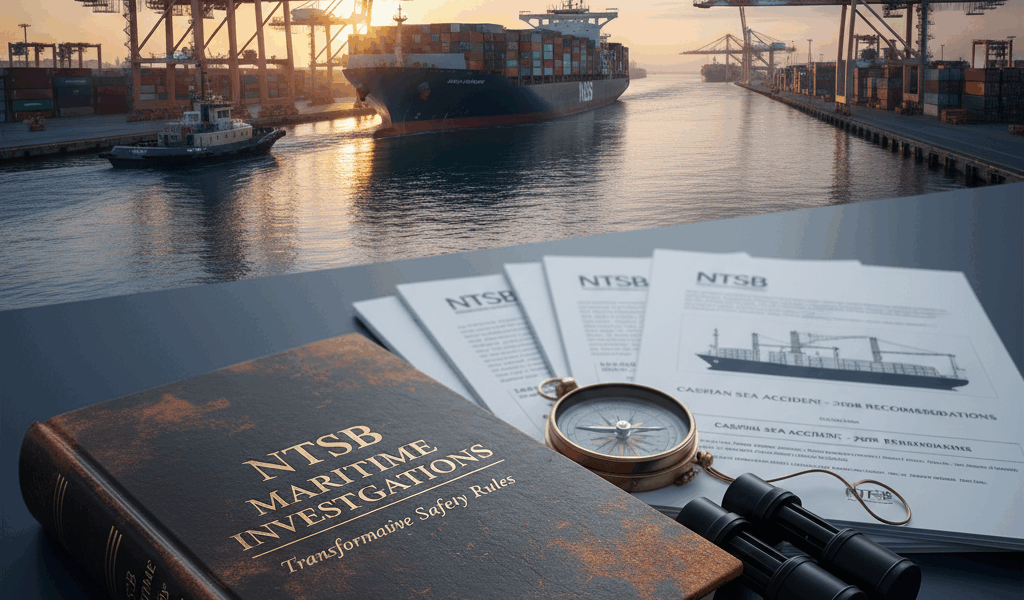
Maritime safety improvements rarely emerge from abstract policy discussions. More often, they come from investigating what went wrong when people died. The National Transportation Safety Board (NTSB), though primarily known for aviation investigations, has conducted landmark marine casualty investigations that fundamentally changed how ships are designed, operated, and regulated.
These investigations share a common approach: reconstruct what happened, identify contributing factors, and recommend changes to prevent recurrence. The recommendations that follow have reshaped everything from ferry design to fishing vessel safety equipment.
SS Edmund Fitzgerald (1975)
Probably should have led with this section, honestly. The loss of the Edmund Fitzgerald on Lake Superior remains one of the most studied maritime disasters in American history. The 729-foot ore carrier sank during a November storm, taking all 29 crew members with her. The wreck spawned not only investigations but also a cultural reckoning with Great Lakes shipping dangers.
The Coast Guard investigation concluded that the most likely cause was massive flooding through ineffectively secured hatch covers. Heavy seas may have damaged the covers, allowing water to enter the cargo holds and eventually overwhelm the vessel.
Changes That Followed
- Stricter hatch cover securing requirements for Great Lakes vessels
- Mandatory survival suits for all crew members
- Enhanced weather reporting and forecasting for the Great Lakes
- Required emergency position indicating radio beacons (EPIRBs)
The Fitzgerald investigation highlighted how cargo vessels can sink with shocking speed when conditions align against them. The ship reported being in good condition, then simply disappeared—a reminder that situational awareness and weather avoidance remain critical even for large, well-maintained vessels.
SS Marine Electric (1983)
The Marine Electric sank off the Virginia coast in February 1983, claiming 31 of 34 crew members. The 605-foot bulk carrier had been converted from a World War II-era vessel and suffered from extensive structural deterioration that its inspections failed to identify.
Survivors described hatch covers failing as heavy seas broke over the deck, with flooding progressing rapidly through the cargo holds. The ship sank in approximately 30 minutes, leaving crew members in frigid water with inadequate survival equipment.
The Investigation’s Impact
That’s what makes the Marine Electric case so significant. The investigation, led by NTSB member and former Coast Guard officer Jim Burnett, proved transformative. The report documented systemic failures in Coast Guard inspection procedures that allowed a deteriorated vessel to continue operating.
Key recommendations included:
- Enhanced structural inspection requirements for older vessels
- Improved survival craft and equipment standards
- Cold water survival training requirements
- Reform of Coast Guard inspection practices
The investigation sparked congressional hearings and led to fundamental changes in how the Coast Guard approaches vessel safety. The concept of “grandfather clauses” that exempted older vessels from newer safety standards came under sustained criticism.
Staten Island Ferry Andrew J. Barberi (2003)
The crash of the Staten Island Ferry Andrew J. Barberi into a maintenance pier killed 11 passengers and injured dozens more. The investigation revealed that the pilot had lost consciousness due to a combination of exhaustion and the effects of medication, while the assistant captain had left the wheelhouse.
The ferry was essentially piloted by no one in the final minutes before impact. Let that sink in for a moment.
Systemic Failures
The NTSB investigation documented multiple contributing factors:
- Crew fatigue from extended work hours
- Inadequate bridge resource management
- Failure to follow two-pilot procedures
- Medical condition of the pilot
- Organizational culture that tolerated violations
The recommendations focused on preventing single points of failure in ferry operations, requiring redundant watchkeeping and improved crew rest standards. The accident prompted reforms in ferry operations nationwide.
El Faro (2015)
The loss of the cargo ship El Faro in Hurricane Joaquin claimed all 33 crew members—the deadliest American maritime disaster in decades. The 790-foot container ship sank northeast of the Bahamas after sailing into the path of a rapidly intensifying hurricane.
The NTSB investigation benefited from recovery of the ship’s voyage data recorder, which captured bridge audio during the final hours. This unprecedented evidence revealed decision-making processes and crew discussions that illuminated how the disaster unfolded.
Critical Findings
The investigation identified multiple contributing factors:
- Captain’s decision to maintain course toward the hurricane
- Inadequate weather information and forecasting tools
- Vessel’s age and maintenance condition
- Open scuttles that allowed progressive flooding
- Organizational pressures favoring schedule over safety
The El Faro report led to recommendations including improved weather forecasting requirements, enhanced voyage planning standards, and reforms to the Coast Guard’s inspection system for older vessels. It also sparked discussion about the pressure commercial mariners face to meet schedules even when safety concerns arise.
Conception (2019)
The fire aboard the dive boat Conception killed 34 passengers and crew members anchored off Santa Cruz Island, California. Most victims were asleep in a below-deck bunkroom when fire broke out in the early morning hours.
The investigation revealed that the bunkroom had only one means of escape, which became blocked by fire. The vessel lacked interconnected smoke detectors that would have provided earlier warning, and no crew member was serving as a roving watch during overnight hours.
Small Passenger Vessel Safety
The Conception disaster highlighted gaps in small passenger vessel regulations that had allowed vessels to operate with minimal fire safety provisions. Recommendations included:
- Mandatory interconnected smoke detectors
- Required roving watches on overnight voyages
- Improved means of escape from berthing areas
- Enhanced fire suppression requirements
Congress responded with legislation mandating many of these improvements for small passenger vessels, extending protections that had long been required on larger ships.
The Pattern of Progress
Marine safety regulation often follows a tragic pattern: disaster occurs, investigation identifies causes, recommendations emerge, and eventually regulations change. This reactive approach has its critics, but the alternative—anticipating every possible failure mode—faces practical and political limitations.
What distinguishes effective investigations is their willingness to look beyond immediate causes to systemic factors. The Marine Electric investigation didn’t just blame corroded hatch covers; it examined why inspections failed to identify the problem. The El Faro investigation didn’t simply fault the captain’s decision; it explored organizational pressures that shaped that decision.
For maritime professionals, these investigations offer more than historical interest. They provide case studies in how disasters develop from multiple contributing factors, often including factors that seemed acceptable in isolation. Reading investigation reports—understanding what went wrong and why—is one of the most valuable forms of professional development available.
The seafarers lost in these accidents didn’t die in vain if their deaths led to changes that saved others. That’s the purpose of maritime casualty investigation: ensuring that lessons learned from tragedy become embedded in the regulations, training, and equipment that protect everyone who goes to sea.