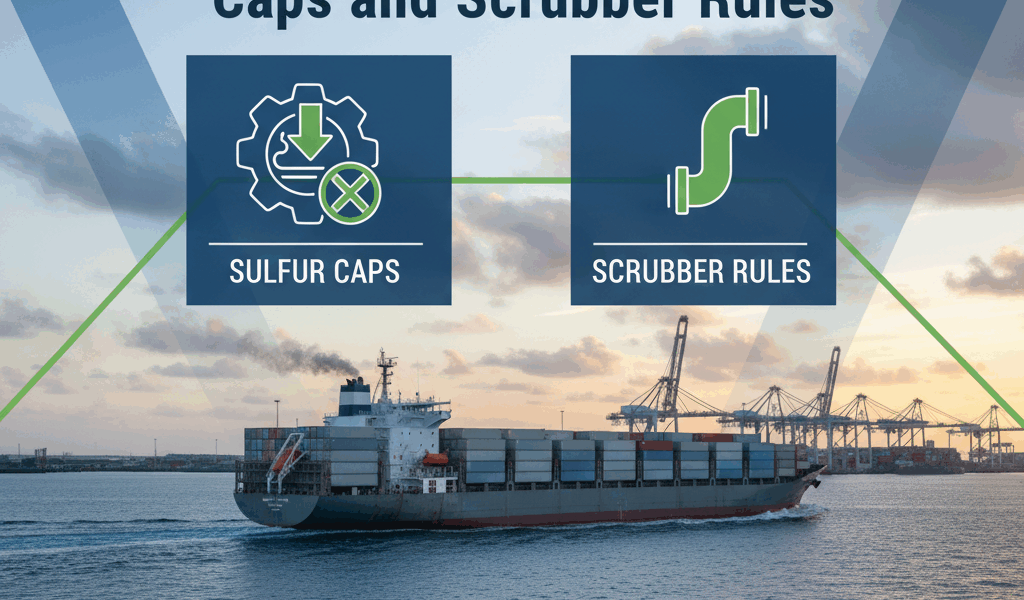
Marine fuel regulations have gotten complicated with all the sulfur caps and emission control areas flying around. As someone who’s followed MARPOL developments for years, I learned everything there is to know about the sulfur revolution and what it means for shipping. Today, I will share it all with you.
The 2020 Sulfur Revolution
On January 1, 2020, the global shipping industry underwent its most significant fuel transition in decades. The International Maritime Organization’s sulfur cap—limiting fuel sulfur content to 0.50 percent worldwide, down from 3.50 percent—forced nearly every commercial vessel to change how it powers itself. Five years later, the implications continue to reshape fuel markets, ship design, and maritime operations.
The sulfur cap addresses legitimate environmental concerns. Sulfur oxides from ship exhaust contribute to respiratory illness, acid rain, and environmental degradation. With ships concentrated on trade routes and near major ports, the health impacts fell disproportionately on coastal communities. Reducing these emissions offered clear public health benefits.
Compliance Options
Probably should have led with this section, honestly. Ship operators had three primary paths to compliance when the regulation took effect:
Low-Sulfur Fuel Oil (LSFO/VLSFO)
The most straightforward approach is simply switching to compliant fuel. Very Low Sulfur Fuel Oil (VLSFO) with 0.50 percent sulfur content is now widely available at major bunkering ports worldwide.
This option required no vessel modifications for most ships, making it the default choice for operators who didn’t want capital investment or operational complexity. However, VLSFO typically costs more than high-sulfur fuel, and early supplies sometimes exhibited compatibility issues with existing fuel systems.
Today, VLSFO has become the standard bunker fuel, with refineries worldwide producing blends that meet the sulfur specification while maintaining the operational characteristics ship engineers expect.
Exhaust Gas Cleaning Systems (Scrubbers)
Scrubbers allow ships to continue burning high-sulfur fuel while removing sulfur oxides from the exhaust. These systems wash exhaust gases with water, capturing sulfur compounds before they’re released to the atmosphere.
The investment proposition was compelling for operators with high fuel consumption. Scrubber installation might cost $2-5 million, but the spread between high-sulfur and low-sulfur fuel could generate returns within two to three years for vessels burning large quantities of fuel.
That’s what makes the scrubber decision so interesting from a financial perspective. The technology comes in three variants:
- Open-loop systems discharge wash water directly to the sea. They’re simpler and cheaper but face restrictions in some ports and coastal waters concerned about discharge water quality.
- Closed-loop systems treat and recirculate wash water, storing residue for disposal ashore. They can operate anywhere but require more equipment and maintenance.
- Hybrid systems can switch between open and closed-loop operation depending on local regulations.
Alternative Fuels
LNG and other alternative fuels naturally meet sulfur requirements while also reducing other emissions. For newbuilds and some conversions, switching fuel type entirely offered long-term advantages beyond just sulfur compliance.
LNG-fueled vessels have proliferated since 2020, with nearly 1,000 ships now operating on gas. The infrastructure continues to expand, with LNG bunkering available at most major ports.
The Scrubber Debate
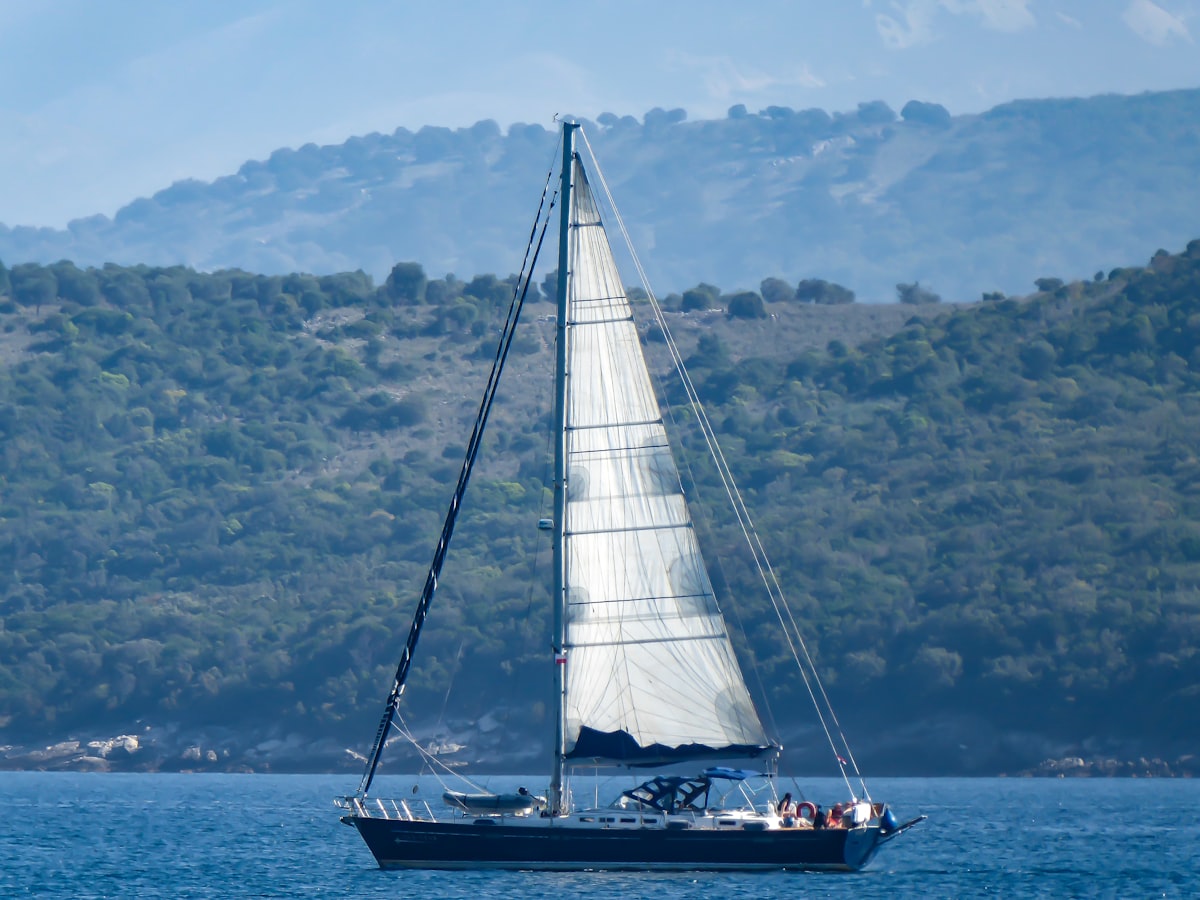
Open-loop scrubbers have become the most contentious compliance option. Critics argue that removing pollutants from the air only to discharge them in the water doesn’t truly address environmental impact—it just shifts it.
Wash water from open-loop scrubbers contains sulfuric acid, heavy metals, polycyclic aromatic hydrocarbons, and other compounds. While regulations specify discharge limits for pH and turbidity, concerns persist about cumulative impacts in heavily trafficked waters.
Multiple jurisdictions have restricted or banned open-loop scrubber discharges:
- Singapore prohibits discharge in port waters
- China restricts discharge in coastal control areas
- Several European ports have implemented local bans
- California and other US states have imposed restrictions
Operators with open-loop systems must track these restrictions and ensure they switch to compliant fuel or closed-loop operation in restricted areas. This operational complexity has led some owners to choose closed-loop or hybrid systems despite higher costs.
Enforcement Reality
The sulfur cap’s effectiveness depends on enforcement, and monitoring has proven more robust than skeptics predicted. Port state control inspections now routinely sample fuel and verify documentation. Ships caught with non-compliant fuel face detention and penalties.
Technology assists enforcement. Satellite monitoring can detect high-sulfur fuel use by observing exhaust plumes. Drones and aircraft sample emissions from passing vessels. The European Maritime Safety Agency operates aerial surveillance specifically targeting sulfur compliance.
Non-compliance has proven less prevalent than feared. The combination of widely available compliant fuel, functional enforcement, and reputational concerns has driven most operators to genuine compliance.
Emission Control Areas
Within designated Emission Control Areas (ECAs), sulfur limits are even stricter—0.10 percent maximum. Current ECAs include:
- Baltic Sea
- North Sea
- North American coasts (extending 200 miles)
- US Caribbean Sea
Ships operating in these areas must use ultra-low sulfur fuel (typically marine gas oil) or ensure their scrubbers achieve equivalent emission reductions. The infrastructure for MGO supply in ECA regions is well-established.
Additional ECAs are under consideration. The Mediterranean Sea, particularly around cruise and ferry routes, has been proposed for ECA designation. As evidence of health benefits accumulates, pressure grows to extend protected areas.
Looking Beyond Sulfur
MARPOL Annex VI addresses more than just sulfur. Nitrogen oxide limits apply to new engines, with Tier III standards requiring significant NOx reduction technology for ships operating in designated areas. Regulations on shipboard incineration, ozone-depleting substances, and volatile organic compounds also fall under Annex VI.
Carbon intensity regulations now overlay the traditional air quality provisions. The IMO’s greenhouse gas strategy connects with Annex VI through efficiency measures and, potentially, future carbon pricing mechanisms. The regulatory framework continues to evolve.
Industry Adaptation
Five years after implementation, the shipping industry has largely absorbed the sulfur cap. Fuel suppliers have adjusted production. Bunker traders offer compliant products worldwide. Vessel operators have established procedures for fuel management and compliance documentation.
The experience offers lessons for future regulatory transitions. Early concerns about fuel availability proved overblown. Enforcement mechanisms worked better than critics predicted. The industry adapted more quickly than many expected.
For ship operators, the sulfur cap has become routine—another compliance requirement to manage alongside the many others governing international shipping. The air quality improvements around major ports demonstrate that maritime environmental regulation can achieve meaningful results when properly designed and enforced.