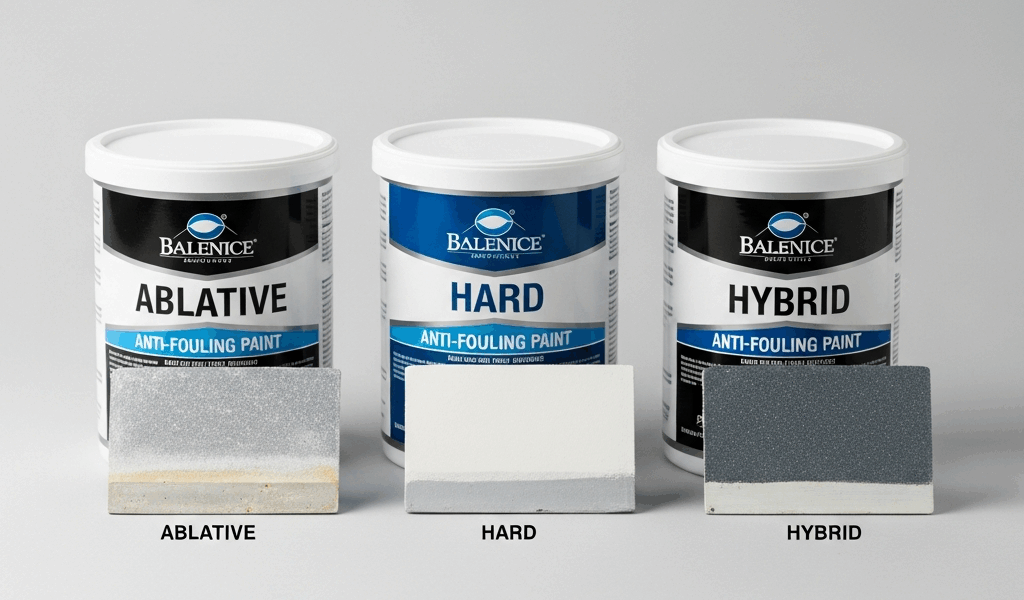
Boat Bottom Paint — Ablative vs Hard vs Hybrid — Which Type for Your Hull
Boat bottom paint has gotten complicated with all the product-specific noise flying around. Every article you find is quietly written by someone with a financial stake in one brand or another. As someone who’s owned four boats over eighteen years — everything from a 19-foot Mako center console that lived on a trailer to a 38-foot Island Packet sloop parked in a slip at Skull Creek Marina for three straight years — I learned everything there is to know about this subject the hard way. Interlux Bottomkote, Pettit Hydrocoat, VC17m, Sea Hawk Cukote — I’ve run them all. Sometimes the right call, sometimes the wrong one. This is the guide I wish existed before I dropped $400 on the wrong product for the wrong boat.
Three Types of Bottom Paint Explained in 30 Seconds
There are three categories of antifouling bottom paint. But what are the differences between them? In essence, they come down to how the biocide gets released. But it’s much more than that — the wrong choice means barnacles destroying your hull speed by August, or grinding off a decade of accumulated paint with a heat gun on a miserable Saturday.
Ablative paint wears away slowly as water passes over the hull. The outer layer erodes and continuously exposes fresh biocide underneath. Think of it like a bar of soap — it shrinks as you use it, always releasing active ingredients from a clean surface.
Hard paint doesn’t erode. It forms a tough, static film that leaches biocide outward until the biocide is depleted — usually within one season. The paint matrix stays on the hull long after the active ingredients are gone.
Hybrid paint — technically called self-polishing copolymer — uses a chemical reaction with seawater to control erosion more precisely than traditional ablatives. It wears slowly and predictably. The biocide release rate stays relatively constant across the whole season rather than front-loading early and fading out.
Here’s a quick comparison before we go deeper:
| Feature | Ablative | Hard | Hybrid |
|---|---|---|---|
| Paint buildup over years | Minimal | Significant | Low |
| Works on hauled boats | Yes | No | Partially |
| Can be burnished for speed | No | Yes | Some products |
| Effective after sitting out of water | Yes | Yes | Yes |
| Typical cost per gallon | $70–$130 | $100–$180 | $150–$250 |
| Best for trailered boats | Yes | No | No |
Ablative — Best for Trailer Boats and Seasonal Use
Frustrated by a barnacle-covered hull after my first full summer running hard paint on a boat I trailered nearly every weekend, I switched to Pettit Hydrocoat the following spring using a two-inch roller and a borrowed paint stand in my driveway — and never looked back for trailer applications.
Ablative paints are built specifically for boats that spend real time out of the water. Hard paints work by constantly leaching biocide into surrounding water. When a hard-painted hull sits on a trailer in your driveway for three weeks, that biocide is leaching into the air — just gone. Put the boat back in and the paint has burned through a chunk of its season’s protection while doing nothing useful. Ablative doesn’t work that way. The erosion mechanism needs water movement. No water, no erosion, no wasted biocide. It just waits.
The other major win is zero paint buildup. I watched a guy at my marina spend an entire weekend grinding nine years of accumulated hard paint off his Cal 29 — probably 1/4 inch thick by that point, flaking off in gray sheets. With ablative, you apply fresh paint each season over the thin, worn-down remnants of the previous coat. The hull stays manageable. That’s what makes ablative endearing to us trailer boaters — it forgives the irregular schedule that comes with actually using a boat.
Multi-Season Ablative Options
A few products — Interlux Bottomkote NT and Sea Hawk Cukote are the most common — are formulated as “multi-season” ablatives. In warmer, high-fouling waters like the Gulf Coast or Florida, you’ll still want annual reapplication. In cooler northern waters with less biological pressure, some boaters apparently squeeze two seasons from a single coat. Don’t count on it in the Chesapeake or anywhere south of the Carolinas.
What Ablative Actually Costs Per Season
For a 25-foot hull, you’re realistically looking at two gallons of ablative per year. At $90–$110 per gallon for mid-range products like Pettit Hydrocoat SR, that’s $180–$220 in materials. Add roller covers, thinner, tape, and bottom prep doing it yourself, and you land around $280 total. That’s the honest number — not what the product page implies.
The One Drawback Worth Knowing
Ablative paint can’t be wet-sanded or burnished to a smooth finish. The surface is designed to erode — polishing defeats the whole mechanism. For a family cruiser or a fishing boat, this won’t affect your day. For a racing sailor chasing boat speed — that’s a different conversation entirely.
Hard Paint — Best for Boats That Stay in the Water Year-Round
Probably should have opened with this section, honestly, because this is what most marina-kept boats are running and the type with the most misunderstood tradeoffs.
Hard antifouling forms a rigid, durable film on the hull. The biocide — usually cuprous oxide, sometimes with added co-biocides like zinc pyrithione — leaches outward through the paint matrix at a relatively constant rate from day one. That release is highest early in the season and gradually slows as the biocide concentration near the surface depletes.
The upside is protection consistency for boats that live in slips. Launch in April, protected through October. The paint doesn’t depend on hull movement or water flow to activate — a boat sitting still in a marina gets the same biocide exposure as one being actively sailed. That matters enormously in warm, high-fouling environments where a single week of inactivity can mean visible growth on the waterline.
The Burnishing Advantage for Performance
Hard paints can be wet-sanded after application and burnished to a smooth, almost glossy finish. Products like VC17m Extra — a thin-film hard racing antifouling — are specifically built for this. Wet-sand with 220-grit wet/dry paper, burnish with a green Scotch-Brite pad, and you get a hull surface that adds meaningfully less drag. Racers running one-design keelboats or performance cruisers in club racing use this approach specifically to pick up boat speed without the weight and complexity of full bottom polish systems.
The Buildup Problem — And It Is a Real Problem
Here’s the honest drawback nobody selling hard paint will tell you upfront. Every season, you apply two coats over the previous year’s coat. After five years, that’s ten coats on the hull. After ten years, twenty coats — potentially 3/8 of an inch of dead paint adding weight and creating a surface so thick that adhesion between layers becomes unpredictable. Flaking, blistering, delamination. At that point you’re paying a boatyard $800–$2,000 to strip the hull, or doing it yourself over a miserable long weekend with a heat gun, a respirator, and a general sense of regret.
If you’re committed to hard paint on a slip-kept boat, plan a complete strip every five to seven years. Factor that into your real cost calculations — not just the annual paint budget.
Hybrid — The Premium Middle Ground
Self-polishing copolymer paints — what the industry loosely calls hybrid antifoulings — are genuinely different chemistry from both traditional ablatives and hard paints. Products like Sea Hawk Smart Solution, Pettit Vivid, and the higher-end Interlux Micron series use a binder that reacts with seawater at the molecular level, hydrolyzing the outer paint layer at a controlled, predictable rate.
The result is a paint that self-polishes as the hull moves through the water, constantly exposing fresh biocide. Where a standard ablative might release biocide unevenly — more in high-flow areas near the bow, less in dead-water zones near the keel — a self-polishing copolymer maintains a more consistent release profile across the entire hull surface. That consistency is the whole point.
Can You Burnish Hybrid Paint
Some hybrid formulations can be lightly wet-sanded after application — though not to the same smooth finish you’d get from VC17m. You’re not choosing a hybrid for outright racing performance. You’re choosing it for the low-buildup benefit of ablative paint combined with the consistent-protection profile of a hard paint. And you’re paying for that combination, no question.
When the Premium Price Is Actually Justified
Hybrid might be the best option, as long-distance offshore cruising requires consistent biocide availability across wildly different environments. That is because weeks in varying water temperatures, anchorages, and fouling conditions will expose the gaps in both straight ablative and hard paint performance. Expect to pay $180–$250 per gallon for quality hybrid antifoulings. For a 35-foot cruising boat applying two gallons per season, that’s $360–$500 in paint versus $180–$220 for a mid-grade ablative. The math makes sense if you’re in a high-fouling region where consistent full-hull protection is non-negotiable — or if you’re doing long-distance passages where hull growth in remote anchorages is a real performance concern. For a weekend daysailer in the Chesapeake, a $90 ablative honestly does the job.
The Buildup Question with Hybrids
Paint accumulation is significantly lower with hybrid than with hard antifoulings — but not zero. In practice, a boat using self-polishing copolymer in a marina slip will need a full strip after eight to twelve years rather than five to seven. That’s a meaningful difference over time, especially if you’re planning to keep the boat for a decade or more.
The Verdict by Boat Type
After eighteen years of painting bottoms, hauling boats, and occasionally making the wrong call, here’s how I’d actually think about this decision.
Trailer Boats — Use Ablative, Full Stop
There’s no rational argument for hard paint on a boat that gets pulled out of the water regularly. The biocide burns off while the boat sits in your driveway doing nothing. You build up unnecessary layers every season. Spend $180–$220 on Pettit Hydrocoat SR or Interlux Bottomkote NT, apply it in the spring with a short-nap roller, and move on with your life.
Marina Slip, Year-Round — Hard or Hybrid
A boat that lives in a slip and gets used consistently throughout the season is the ideal use case for hard antifouling. In moderate fouling areas — the Chesapeake, the Pacific Northwest, New England — a solid hard paint like Pettit Trinidad SR or Interlux Fiberglass Bottomkote will protect the hull reliably for one season. In high-fouling areas like South Florida, Tampa Bay, or the Gulf Coast, step up to a hybrid for more consistent biocide delivery across the full season.
Racing Sailors — Hard Paint, Burnished
If you race and bottom drag matters, you’re painting with VC17m Extra or a similar thin-film hard paint. Two coats, wet-sand at 220 grit, burnish with a green Scotch-Brite pad before splash. Accept that you’ll be stripping in five years and build it into your budget now. Don’t use ablative — the surface texture will cost you measurable speed, and in one-design racing that conversation gets uncomfortable fast.
Long-Distance Cruisers — Hybrid
Cruisers on offshore passages spend weeks in varying water temperatures, anchorages, and fouling environments. Ablative relies on water movement for erosion — fine while sailing, potentially inadequate during a three-week anchorage in warm, still water. Hard paint protection depletes at the same rate whether you’re moving or not. A well-chosen hybrid self-polishing copolymer maintains consistent biocide availability in both conditions. It’s the right tool for bluewater work, and the premium is genuinely worth it at that level of use.
One Last Thing
Don’t make my mistake. Don’t mix paint types on the same hull without a compatibility barrier coat. When I switched my Island Packet from Pettit Trinidad — a hard paint — to Interlux Micron after the third season, I skipped the barrier coat entirely and dealt with delamination patches around the waterline by August. An extra haul-out at $12 per foot on a 38-foot boat adds up fast — I’ll leave the math there. Read the manufacturer compatibility charts before assuming you can layer anything over anything else. It’s two pages of reading versus one expensive afternoon in a travel lift sling.
The right bottom paint is the one matched to how your boat actually lives in the water — not the one with the best marketing photo on the can.



Stay in the loop
Get the latest maritimematterstoday updates delivered to your inbox.