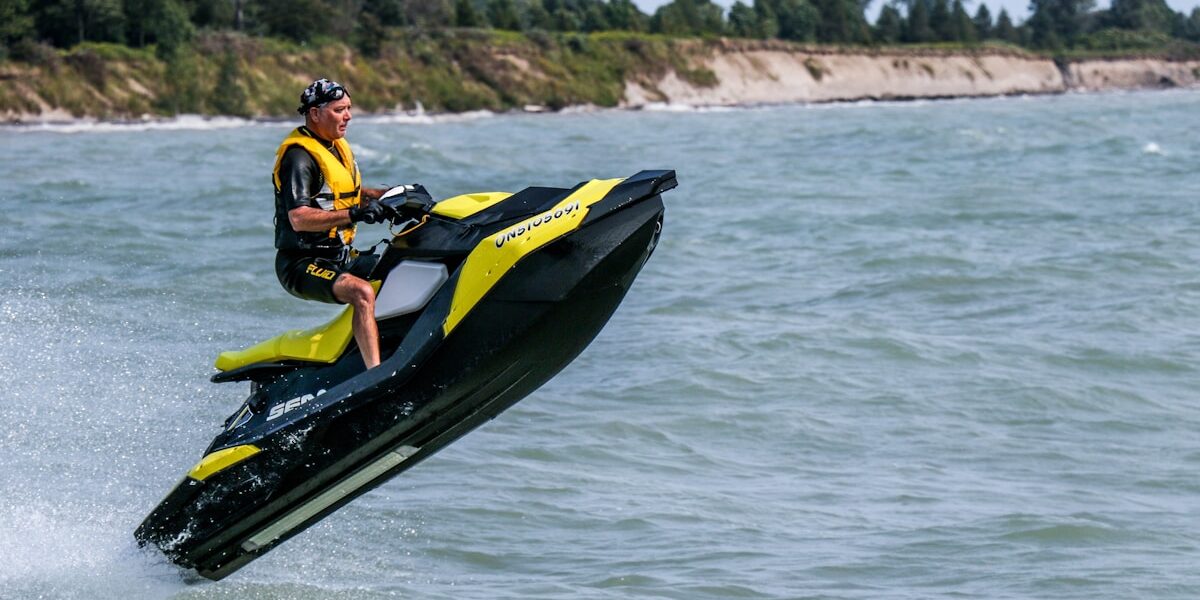
Sea-Doo has dominated the personal watercraft market for decades, and their expansion into boats has created a lineup that combines jet-ski handling with genuine boating capability. Whether you’re considering your first PWC or shopping for a jet boat that can tow wakeboarders while seating a family, this guide covers the current Sea-Doo and PWC landscape.
Understanding Personal Watercraft Categories
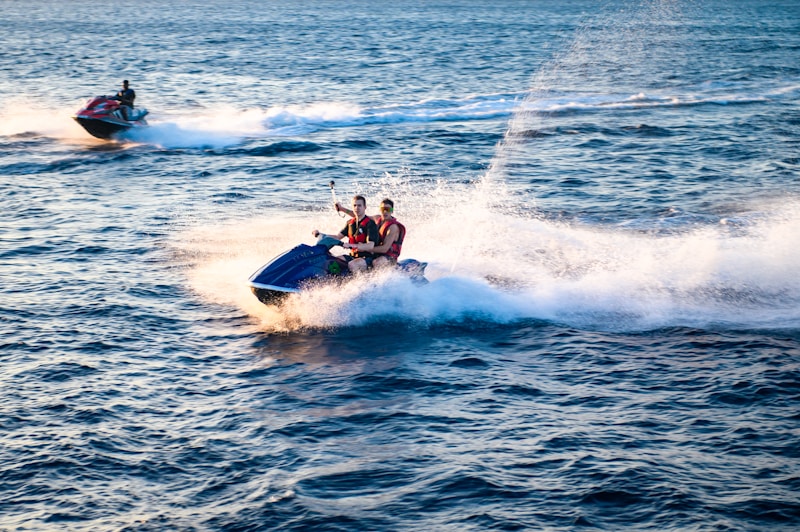
Recreation/Entry-Level
Perfect for casual riders who want fun on the water without complexity. These models typically feature:
- Naturally aspirated engines (less maintenance, lower cost)
- Basic instrumentation
- Affordable price points ($8,000-12,000)
- 1-2 person seating
Sea-Doo Spark Series: The Spark transformed the industry when introduced, offering genuine Sea-Doo quality at entry-level prices. The Spark Trixx adds playful handling with adjustable trim.
Performance/Touring
For riders wanting more power and features:
- Supercharged engines (170-300+ horsepower)
- Advanced hull designs for rough water
- Full instrumentation with GPS
- Three-person seating with storage
- Price range: $14,000-18,000
Sea-Doo GTX Series: The benchmark for touring PWC. Comfortable enough for all-day rides with performance that satisfies experienced riders.
Luxury/Flagship
Premium models with every available feature:
- Maximum horsepower options
- Advanced suspension systems
- Premium audio and connectivity
- Adjustable ergonomics
- Price range: $18,000-22,000+
Sea-Doo RXP-X and GTX Limited: These models compete with motorcycles for pure excitement while offering genuine practicality.
Sea-Doo PWC Model Breakdown
Spark (Starting around $8,000)
The lightweight, fuel-efficient entry point. Available in 60 or 90 horsepower versions with two or three-seat configurations. The Spark Trixx variant adds variable trim for stunts and playful riding.
Best for: Budget-conscious buyers, beginners, lighter riders, pond/lake use
GTI Series ($11,000-14,000)
The step-up from Spark brings a full-sized hull, more storage, and genuine capability. GTI 130 offers naturally aspirated reliability while GTI SE adds convenience features like Intelligent Brake and Reverse (iBR).
Best for: Family use, towing light tubes, riders wanting more capability than Spark
GTX Series ($14,000-18,000)
The touring standard. Supercharged power, comfortable seating for three, substantial storage, and premium features like the LINQ system for accessories. GTX Limited adds suspension and audio.
Best for: All-day riders, couples who ride together, rough water conditions
Wake Pro ($16,000-17,000)
Purpose-built for towing wakeboarders, skiers, and tubers. Features a retractable ski pylon, adjustable mirrors, ski mode with low-speed throttle control, and a boarding ladder.
Best for: Dedicated water sports enthusiasts, families who ski/wakeboard regularly
RXP-X ($16,000-17,000)
The performance flagship. Race-inspired hull, aggressive ergonomics, and maximum power create the most exciting ride in the lineup. This is the PWC for experienced riders who want adrenaline.
Best for: Experienced riders, performance enthusiasts, those transitioning from motorcycles
Fish Pro Series ($17,000-20,000)
Fishing-specific PWC with dedicated cooler/livewell, fish finder integration, trolling mode, and stability at rest. Accesses water too shallow for boats while carrying serious fishing gear.
Best for: Anglers, shallow water fishing, accessing remote spots
Sea-Doo Jet Boats
Sea-Doo’s switch-branded jet boats combine PWC excitement with genuine boating capability.
Switch Sport (Starting around $30,000)
The entry-level jet boat platform offers 100 or 170 horsepower, seating for up to 9, and modular deck configurations. No propeller means swimming near the boat is safer, and jet propulsion handles shallow water better than traditional boats.
Switch Cruise ($35,000-50,000)
Larger deck space, more seating options, available tower for watersports, and premium features. Available in 18, 19, and 21-foot lengths with single or twin-engine configurations up to 330 combined horsepower.
Advantages of Jet Boats
- Safety: No exposed propeller for swimmers
- Shallow water: Draft of under two feet
- Maneuverability: Jet propulsion allows tight turns
- Low maintenance: No lower unit, no prop to damage
- Fun factor: PWC-style handling in a larger package
Limitations
- Higher fuel consumption than comparable outboard boats
- Less efficient at cruising speeds
- Reduced top-end speed versus equivalent horsepower outboards
- Not ideal for serious offshore use
Essential Accessories
Safety Equipment (Required)
- Life jacket for each passenger (Type III minimum for PWC)
- Fire extinguisher (built into most models)
- Sound-producing device (whistle)
- Kill switch lanyard (wear it—always)
Recommended Additions
- Dry bag: Protect phone and wallet
- PWC cover: Essential for outdoor storage
- Boarding ladder: Makes reboarding much easier
- Extended warranties: Jet propulsion systems can be expensive to repair
- GPS/depth finder: Especially useful for fishing or unfamiliar water
Ownership Considerations
Storage
PWC need covered storage or quality covers. Sun exposure destroys seats and plastics. Winterizing is essential in cold climates—water left in the system causes expensive damage.
Trailer Selection
Double PWC trailers run $2,000-4,000 and are essential if you’re buying two units. Single-place trailers are available for around $1,000-1,500. Aluminum trailers cost more but eliminate rust concerns.
Insurance
PWC insurance runs $200-400 annually for basic coverage. Jet boats cost more—expect $500-800 per year depending on the model and your boating history.
Maintenance
Annual service includes oil change, spark plugs, and inspection. Budget $200-400 for dealer service or less if you’re handy. The wear ring (the component that seals around the impeller) eventually needs replacement—a $300-500 job.
Buying New vs. Used
New Advantages
- Full warranty coverage
- Latest technology and features
- No hidden problems from previous owner
- Financing availability
Used Advantages
- Significant cost savings (30-50% less)
- Depreciation already absorbed
- Many low-hour units available from sellers who upgraded
When buying used, check engine hours (under 100 is “like new,” 200-300 is normal use), inspect for hull damage, verify service history, and test ride before purchasing.
Getting Started
Most states require a boater safety course before operating PWC—take the course even if your state doesn’t require it. Rental experiences help determine what style suits you before committing to a purchase. Demo days at dealerships offer chances to try multiple models back-to-back.
The PWC and jet boat market offers options from $8,000 playful runabouts to $50,000+ family boats. The common thread is fun—there’s nothing quite like the immediate acceleration and responsive handling that jet propulsion delivers.