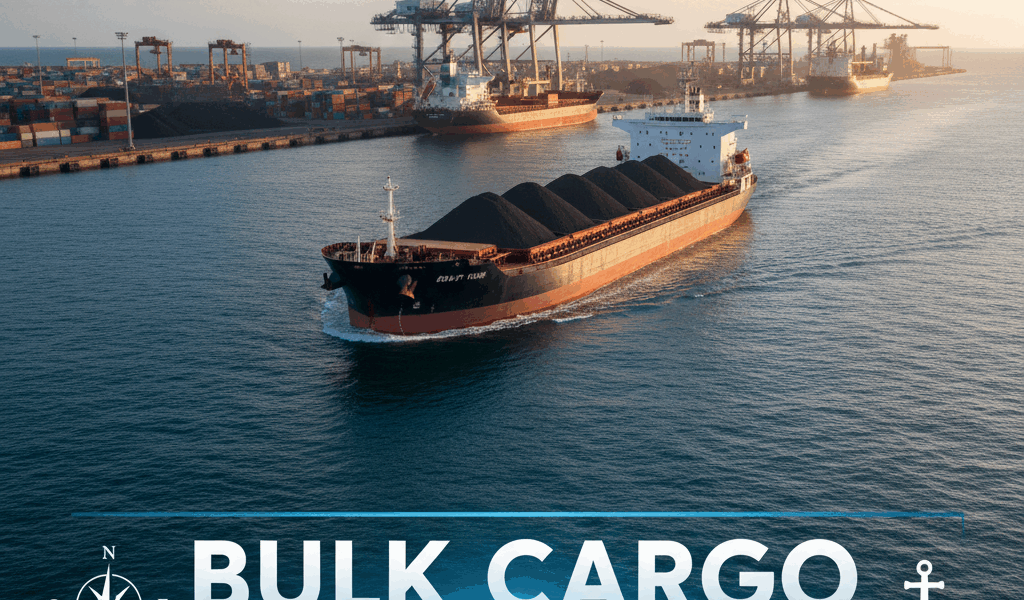
Dry bulk shipping has gotten complicated with all the commodity cycles and regional dynamics flying around. As someone who’s tracked this sector through multiple market swings, I learned everything there is to know about what drives bulk carrier markets. Today, I will share it all with you.
Dry Bulk Market Dynamics

The dry bulk sector—carrying iron ore, coal, grain, and minor bulks—tracks global industrial and agricultural activity more directly than any other shipping segment. Understanding bulk carrier markets requires following commodity flows, infrastructure development, and the economic health of major consuming nations.
Major Commodity Trades
Probably should have led with this section, honestly. Iron ore remains the largest dry bulk commodity by volume, with trade dominated by flows from Australia and Brazil to Asian steel mills. Chinese steel production, which consumes the majority of seaborne iron ore, continues to drive demand despite attempts to shift toward scrap-based production.
Coal trade patterns are evolving as energy transition pressures affect different markets differently. While some regions reduce coal imports, others are expanding consumption, creating shifting trade flows that benefit certain vessel sizes and routes.
Grain and agricultural products provide counter-seasonal demand that helps stabilize bulk carrier earnings. Southern Hemisphere harvests move during the Northern Hemisphere’s off-season, smoothing what would otherwise be more volatile employment patterns.
Fleet Composition

That’s what makes fleet composition so critical to understand. The dry bulk fleet spans vessel sizes from Handysize (around 30,000 dwt) to Capesize (over 180,000 dwt), with different sizes serving different trades. Capes depend heavily on iron ore and coal; Panamaxes carry grain and coal; Handymax and Handysize vessels serve minor bulks and ports that cannot accommodate larger ships.
Fleet age has moderated from historical extremes, with scrapping of older tonnage during weak markets reducing average age. The orderbook remains manageable relative to the existing fleet, suggesting supply growth will be moderate in coming years.
Rate Environment
Bulk carrier rates typically follow economic cycles with amplified volatility. When commodity demand grows, rates can spike dramatically; during slowdowns, they can collapse to levels that barely cover operating costs.
The Baltic Dry Index aggregates rates across vessel sizes, providing a widely-watched indicator of bulk shipping health. While useful as a trend indicator, the index masks significant variation between segments and routes.
Regional Developments
Indian steel production growth offers potential demand upside, though domestic iron ore production limits import requirements. Southeast Asian coal demand continues growing as the region industrializes, partially offsetting European reductions.
Brazilian iron ore export capacity expansions could increase volumes when fully operational, though project delays have pushed timelines. These developments will affect Capesize demand on long-haul Brazil-China routes.
Market Outlook
Dry bulk markets face the eternal challenge of matching commodity production and consumption cycles with vessel supply. Moderate orderbook growth suggests supply discipline, but demand depends on economic factors—Chinese growth rates, infrastructure investment, agricultural production—that remain uncertain. Successful bulk carrier operators develop strategies that accommodate this inherent cyclicality.




Stay in the loop
Get the latest maritimematterstoday updates delivered to your inbox.