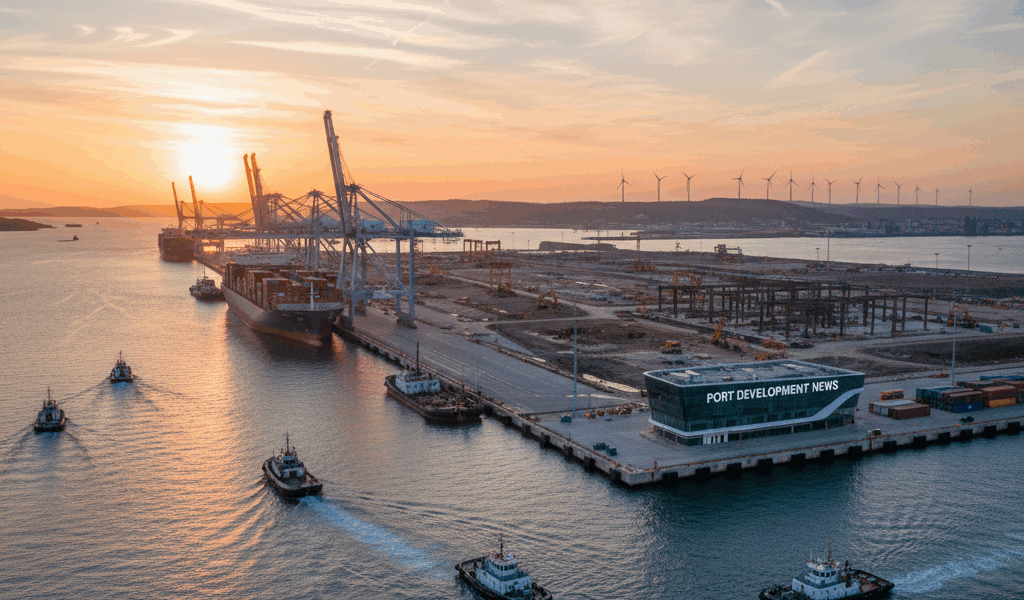
Port infrastructure has gotten complicated with all the automation debates and environmental requirements flying around. As someone who’s tracked port development globally, I learned everything there is to know about where major ports are investing. Today, I will share it all with you.
Global Port Development Trends

Ports serve as critical nodes in global supply chains, connecting ocean transport with inland distribution networks. Investment decisions made today—about capacity, automation, and environmental infrastructure—will shape logistics patterns for decades. Understanding where ports are investing reveals expectations about future trade flows and technology evolution.
Capacity Expansion
Probably should have led with this section, honestly. Major container ports continue expanding to accommodate larger vessels and growing volumes. Singapore’s Tuas mega-port, when complete, will consolidate operations with enhanced capacity and automation. Chinese ports continue developing additional berths and improved hinterland connections.
Middle Eastern ports are expanding aggressively, betting on their geographic position between Asia and Europe. Developments in Dubai, Abu Dhabi, and Saudi Arabia aim to capture transshipment traffic and support regional economic diversification.
In the Americas, infrastructure investment has lagged vessel size growth. East Coast ports have deepened channels to accommodate larger post-Panamax vessels, while West Coast facilities work to improve productivity at existing terminals.
Automation Progress

That’s what makes automation such a complex topic. Fully automated container terminals—with automated stacking cranes, guided vehicles, and minimal human operators—have proliferated, though with mixed results. The promise of lower labor costs and 24/7 operation must be balanced against high capital requirements and operational complexity.
Hybrid approaches combining automation with human oversight have gained favor. Semi-automated terminals can capture efficiency benefits while maintaining flexibility for non-standard operations.
Remote operations technology enables equipment control from centralized locations, improving working conditions and enabling expertise sharing across terminals.
Environmental Infrastructure
Shore power installations are expanding rapidly as regulations mandate their use. California requirements have driven adoption at West Coast ports, with similar mandates emerging in Europe and Asia. The infrastructure investment is substantial but enables significant emission reductions at berth.
LNG bunkering facilities are now available at most major ports, supporting the growing fleet of gas-fueled vessels. Investment continues in anticipation of further growth.
Some ports are exploring hydrogen and ammonia infrastructure in preparation for future fuel transitions, though commercial demand remains limited.
Hinterland Connections
Port competitiveness increasingly depends on connections to inland markets. Rail infrastructure, truck access, and barge connections all influence which ports capture cargo flows.
Intermodal facilities that enable efficient transfer between transport modes are critical investments. Ports with constrained road access are particularly focused on rail development to manage traffic and environmental impacts.
Resilience Planning
Recent supply chain disruptions have heightened focus on port resilience. Investment in redundant systems, emergency operations planning, and climate adaptation addresses concerns about reliability in an uncertain world.
For port authorities and terminal operators, balancing efficiency with resilience requires careful consideration of which risks to accept and which to mitigate through investment and planning.


Stay in the loop
Get the latest maritimematterstoday updates delivered to your inbox.