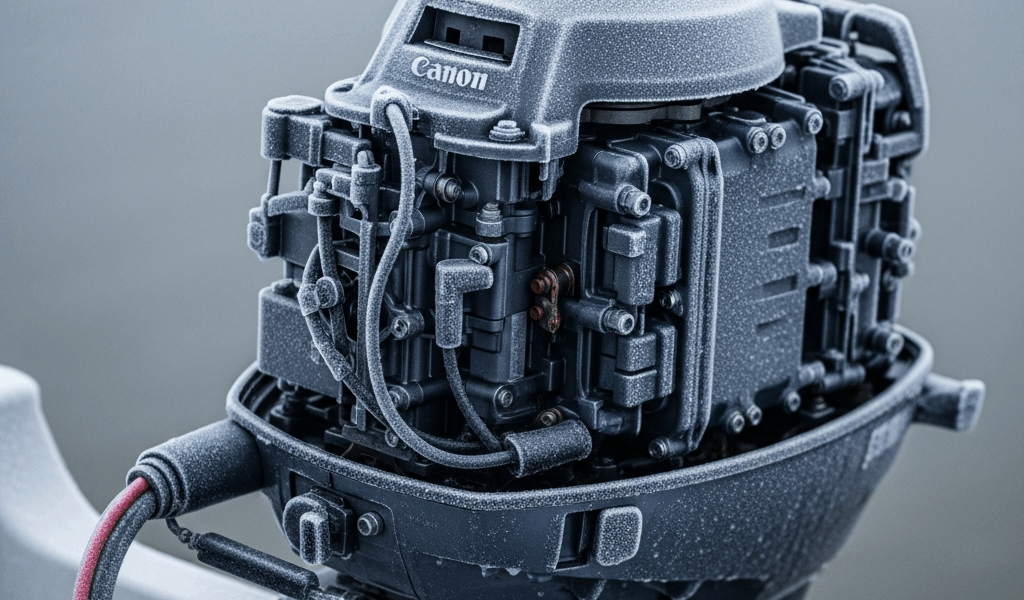
Outboard Motor Hard to Start When Cold — Fix Guide
Cold-start trouble has gotten complicated with all the bad advice flying around online. As someone who’s spent fifteen years hanging around docks and boat ramps from Maine to Florida, I learned everything there is to know about why outboards throw a tantrum on cold mornings. Today, I will share it all with you.
Here’s the thing most people miss: cold-start failures follow a pattern. Your outboard either cranks but won’t fire, fires then quits immediately, or barely turns over at all. Three symptoms. Three different root causes. Treat them like one generic problem and you’ll waste an entire Saturday — at least if you’re anything like me when I first started troubleshooting these things.
Why Cold Starts Are Harder on Outboards
But why is cold starting such a problem? In essence, cold fuel doesn’t vaporize the way warm fuel does. But it’s much more than that.
Below roughly 50°F, your carburetor or injectors need a richer mixture — more fuel relative to air — just to get combustion going. Outboards handle this through a choke plate that restricts airflow, a primer bulb you squeeze manually, or an electronic enrichment valve on fuel-injected models. That’s what makes the cold-start system endearing to us boaters. It’s elegant when it works.
One sticking choke. One failed primer bulb. One weak battery. Any of those throws the whole sequence sideways. Knowing what’s supposed to happen makes it obvious when something breaks down.
Cranks Over But Will Not Fire
Engine spins. You can hear it. Nothing catches. No combustion. This is the most common cold-weather complaint I hear at the dock, and it almost always traces back to fuel or ignition — not the starter motor.
Probably should have opened with this section, honestly. Start with the primer bulb on your fuel line. Squeeze it. You want firm resistance, like a fully inflated bicycle tire. Soft and squishy after ten squeezes means fuel isn’t reaching the carburetor — either the bulb has developed a pinhole leak or the one-way check valve inside has failed. I’ve watched people pull perfectly good fuel pumps and spend $300 at a marina when an $8 primer bulb from West Marine was the actual problem. Don’t make my mistake.
Next, look at the choke plate inside the carburetor intake. Cold engine means fully closed — no visible gap, no daylight getting through. A bent plate or stuck linkage leaves it cracked open just enough to kill your fuel-air ratio. On EFI outboards there’s no manual choke to inspect. The ECU handles enrichment electronically. You’ll notice a slightly elevated idle pitch for the first several seconds — that’s normal and intentional.
Pull the spark plugs. Black, wet, smelling like raw fuel — those are fouled plugs from flooding during repeated start attempts. Soak them five minutes in carburetor cleaner or just swap them out. I’m apparently someone who goes through NGK BR8ES plugs every season anyway, and that schedule works for me while skipping annual replacements never does. Quality outboard plugs run $6 to $15 each. Not worth skimping.
Check the fuel age. Gasoline older than 60 days in a sealed tank — faster during summer heat storage — loses volatility as the lighter hydrocarbons evaporate. What remains is a gummy, varnish-forming residue that clogs passages and resists ignition. Drain it. Refill with fresh 87 or 89 octane mixed with a proper fuel stabilizer like Star Tron or Sta-Bil Marine formula. This single swap has resurrected more stubborn cold-start engines than any other fix I’ve tried.
One technique worth knowing: the two-pump-and-hold method. Prime the bulb twice firmly, then hold the primer button down while cranking — or keep squeezing on older manual systems. Crank five seconds. Pause ten seconds. Crank again. You’re manually forcing a richer mixture past whatever the choke is doing on its own.
Fires for a Second Then Dies
This one tells you something important. The engine caught — combustion happened — which means spark and basic fuel delivery are both working. Something is cutting it off almost immediately. Usually that means the idle circuit is running lean, or the choke is releasing enrichment way too early.
On carbureted motors, the idle circuit is a separate fuel passage with its own adjustment screw. Cold starts depend entirely on that circuit when the throttle is barely cracked. Partial varnish blockage or water contamination in that passage causes instant fuel starvation at idle. The engine fires on the initial rich charge, leans out in under a second, and dies. Frustrating to diagnose if you don’t know where to look.
Find the idle mixture screw on the side of the carburetor body — usually covered by a small rubber plug on newer models. Turn it one-quarter counterclockwise. That enriches the idle circuit. If the engine holds after that adjustment, you’ve found it. Slowly tighten the screw back until you hear the engine begin to stumble, then back it out a half turn from that point. That’s your cold-idle sweet spot.
Fuel-injected outboards bring a different set of variables. A partially stuck idle air control valve, or a coolant temperature sensor feeding the ECU bad data, can cause the system to cut enrichment before the engine is anywhere near ready. There’s no user-adjustable screw here — that’s dealer territory unless you own a Yamaha Diagnostic System or equivalent scanner. Worth mentioning to your tech specifically.
Quick field test worth trying first: hold the throttle slightly open on your initial start attempt. Around 1,000 RPM. Bypass the idle circuit entirely. If the engine catches and runs smoothly when you do this, you’ve just confirmed the problem lives in the idle circuit or enrichment system — not spark, not fuel supply.
Clicks or Slow Crank in Cold Weather
Key turns. One click. Silence. Or a slow, grinding crank — nothing like the crisp spin of a healthy start. This scenario is almost never about fuel. It’s electrical, full stop.
Cold temperatures drop battery voltage and simultaneously increase the mechanical resistance the starter has to overcome. A battery that tested fine at 70°F on the workbench last September can fall apart at 30°F under the actual cranking load of a 150-horsepower four-stroke. Corroded terminals compound this. They look clean on the surface. The resistance hides inside the connection where you can’t see it.
Unbolt both terminals. Scrub the post and the clamp connector with a wire brush — the small ones with the cup-shaped brass bristles work best, available at any AutoZone or West Marine for around $4. Reconnect and tighten firmly. Sometimes the improvement is immediate and obvious.
If cleaning doesn’t get you there, load-test the battery. Most marine dealers do it free. AutoZone and O’Reilly do it free. They apply a simulated starter draw and watch voltage under load. Healthy battery: stays above 10.5 volts. Sags below that point, replacement is the only real answer. A quality marine cranking battery — something like an Odyssey PC1500 or an Interstate MHD series — runs $120 to $200 depending on the group size your outboard requires.
The starter solenoid itself fails in cold weather more than people expect. Battery strong, terminals clean, still just getting a single click or nothing — the solenoid contacts are probably burned or the coil is weak. That’s a technician job. Replacement solenoids run $200 to $400 depending on the motor brand and horsepower rating.
Quick Fixes to Try Before Calling a Mechanic
- Drain old fuel — anything sitting more than 60 days — and refill with fresh gasoline mixed with fuel stabilizer. Run the engine three full minutes to circulate treated fuel through the entire system.
- Prime the fuel bulb until it’s completely firm. Two squeezes and hold on the third pump while cranking.
- Inspect the choke plate. Cold engine means fully closed. Spray any varnish buildup with Berryman B-12 Chemtool or equivalent carburetor cleaner and work the linkage manually.
- Pull spark plugs and inspect them. Replace anything fouled, corroded, or more than two seasons old. NGK and Champion both make outboard-specific plugs — use the correct heat range for your motor.
- Clean battery terminals with a wire brush. Both posts. Both clamps. Verify tight connections before moving on.
- Engine fires then immediately dies? Enrich the idle mixture screw one-quarter turn counterclockwise and try again.
So, without further ado — if you’ve worked through everything on that list and the outboard still won’t cooperate in cold weather, you’re probably dealing with a stuck choke linkage, internal fuel-system corrosion, or injector failure on EFI models. When you call the dealer, tell them exactly what you’ve already eliminated. That saves you diagnostic time on the bill and gets you back on the water faster.


Stay in the loop
Get the latest maritimematterstoday updates delivered to your inbox.